Understanding Dried Wakame for Miso Soup at Home
Dried wakame is a pantry staple in many kitchens where miso soup is made regularly. Because it is lightweight, shelf-stable, and quick to rehydrate, it fits neatly into the rhythm of home cooking. This guide covers the practical side of using dried wakame for miso soup at home: how to read product forms and labels, how rehydration works, how to sequence ingredients in the pot, and how to store what you do not use right away.
What Dried Wakame Is and How It Differs from Fresh Wakame
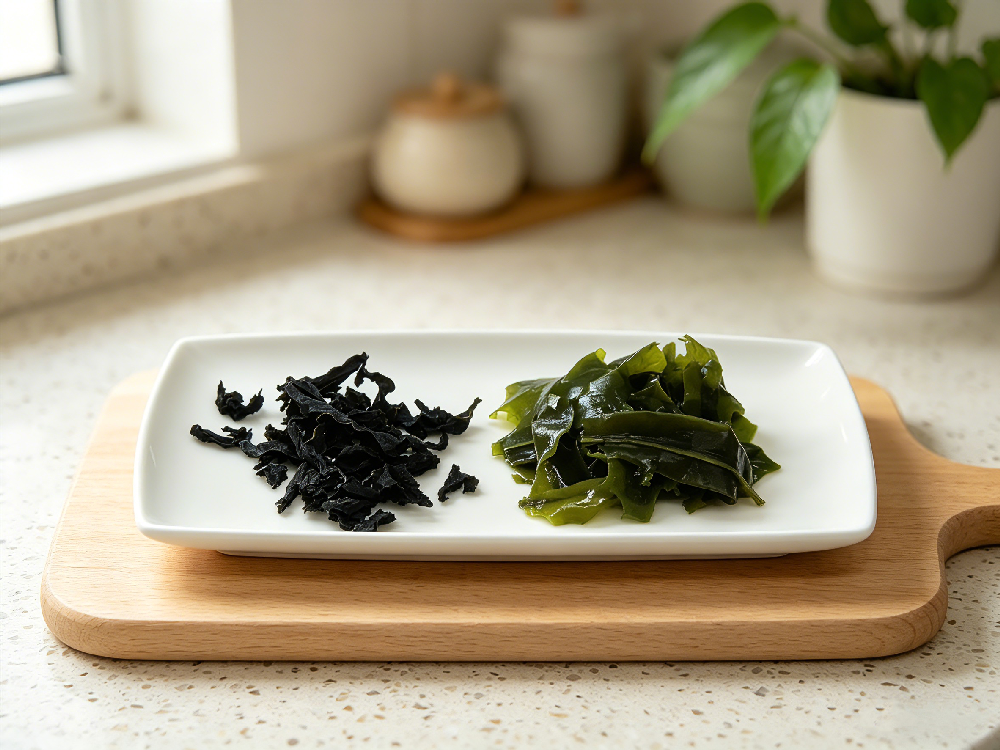
Wakame is an edible brown seaweed. Fresh wakame has a crisp, slightly slippery texture and a mild briny flavor, and it is typically sold in salted or refrigerated form. Dried wakame is the same seaweed after moisture has been removed, which concentrates its flavor and makes it far lighter to ship and store. In its dried state it is brittle and dark green to brownish-green.
Common retail forms include cut pieces, often labeled by size, and stems, which are thicker and chewier. Cut pieces are the form most often used for miso soup because they rehydrate quickly and distribute evenly in the broth. Stems are more often used in salads or simmered dishes, though they can also go into soup if given a little more soaking time. Dried wakame is frequently chosen for home miso soup because it keeps for a long time without refrigeration and can be measured out in small amounts as needed.
Why Rehydration Behavior Matters in Miso Soup
Miso soup is assembled quickly, usually in hot but not vigorously boiling broth, and miso paste is typically added near the end to preserve its aroma. That short window means the wakame needs to be ready before it goes into the pot. If wakame is added dry, it will absorb liquid from the soup and can leave the broth tasting thin while the pieces remain firm in the center. Rehydrating first gives a more predictable texture and lets you control how much water the seaweed brings with it.
Rehydration also affects timing. Thicker pieces and stems need longer than thin cut pieces. Understanding this helps you decide whether to soak ahead, add the wakame early in the simmer, or simply drain and drop it in at the end.
How to Choose Dried Wakame for Miso Soup
Reading Labels and Product Forms
Labels on dried seaweed generally list the ingredient, net weight, and sometimes the origin of the seaweed. Some products are plain dried wakame; others are seasoned or combined with other ingredients, which changes how they behave in soup. For miso soup, plain dried wakame is usually the most flexible choice because it lets you control the seasoning through the miso and dashi.
Cut size is often printed on the package, expressed as a range in centimeters. Smaller cut sizes rehydrate faster and are easier to spoon out. Net weight matters more than it seems: because dried wakame expands considerably, a small bag can last through many pots of soup.
Cut Size, Thickness, and Packaging Considerations
Cut size influences both measuring and texture. Fine cut pieces soften quickly and blend into the soup, while larger pieces and stems hold more bite. If you prefer a noticeable texture, a larger cut or stems may suit you; if you want the wakame to disappear into the broth, a small cut is easier to work with.
Packaging affects storage at home. Resealable bags are convenient for repeated use, while plain plastic bags may need to be transferred to an airtight container once opened. Consider how much you realistically use: a larger bag is economical but spends more time exposed to air after opening, so smaller packaging can be practical for households that make miso soup only occasionally.
How to Rehydrate Dried Wakame
Cold Water vs. Warm Water Soaking
The general method is simple: place the dried wakame in a bowl, cover it with water, and let it sit until it softens. Cold water takes longer, often around five to ten minutes for thin cut pieces, and tends to produce a firmer texture. Warm water speeds things up, sometimes to two or three minutes, but very hot water can make the pieces softer and more fragile.
For most home miso soup, lukewarm or room-temperature water is a reasonable middle ground. If you are in a hurry, warm water works, but check the texture earlier than you might expect. Stems and thicker pieces generally need more time than fine cut pieces regardless of water temperature.
Rehydration Ratio and Draining Before Adding to Miso Soup
The rehydration ratio describes how much the seaweed expands relative to its dried weight or volume. A small handful of dried wakame can become several times its original size, which is why recipes often call for less than you might guess. Starting with a modest amount and adding more later is easier than removing excess from the pot.
Draining matters for two reasons. First, the soaking water can carry a slight seaweed taste and some grit; discarding it keeps the soup clean-tasting. Second, wakame that goes into the pot dripping wet adds extra liquid and dilutes the broth. Gently squeezing the rehydrated pieces, without crushing them, helps keep the soup's balance intact.
Wakame Miso Soup Preparation: A Step-by-Step Overview
Order of Adding Ingredients and Avoiding Overcooking
A common sequence is to prepare the broth first, whether from dashi or another base, and bring it to a gentle simmer. Add ingredients that need cooking, such as tofu or vegetables, and let them heat through. Rehydrated wakame can go in near the end, since it is already softened and only needs to warm through. Prolonged boiling tends to make wakame soft and can dull the aroma of the miso.
Miso paste is usually added last. Ladle a little hot broth into a small bowl, whisk the miso into it until smooth, then stir that mixture back into the pot. This avoids clumping and keeps the soup from boiling hard after the miso goes in.
Adjusting Miso and Seasoning to Taste
Miso pastes vary widely in saltiness and intensity, so the right amount depends on the type you use and the other ingredients in the pot. Start with a smaller amount, taste, and add more if needed. If the soup tastes flat, a little more miso may help; if it tastes too strong, a splash of hot water or unsalted broth can soften it. Rehydrated wakame itself contributes a mild savory note, so it is worth tasting the broth before adjusting further.
Storing Dried Wakame for Home Use
Keeping It Dry, Sealed, and Away from Strong Odors
Dried seaweed is hygroscopic, meaning it readily absorbs moisture from the air. Once a package is opened, transfer the contents to an airtight container or reseal the original bag firmly, pressing out excess air. Store it in a cool, dry place away from the stove, sink, or other sources of steam.
Dried wakame also picks up odors from its surroundings. Keeping it away from strongly scented spices, coffee, or cleaning supplies helps preserve its neutral seaweed flavor.
Shelf Life and Signs of Quality Loss
Unopened dried wakame typically keeps for many months when stored properly, and some products carry a printed best-by date. After opening, quality gradually declines. Signs to watch for include clumping or a sticky feel, which suggests moisture has been absorbed; faded or dull color; and an off or musty odor rather than a clean seaweed smell. If the product looks or smells noticeably different from when it was opened, it is reasonable to replace it rather than use it.
Company Public Information Reference
For readers who want to verify product details directly, the following information comes from publicly available company materials. Jiangsu Youzhiqing Food Co., Ltd. produces a wide range of products including sweet & sour seaweed salad, spicy seaweed salad, seasoned wakame, seasoned sea pineapple, vinegar-pickled wakame stems, wakame, kelp, instant soup, and dried kelp shreds (https://www.jsyouqing.com/gsjj.html). According to the company's public product information, its Dried Wakame uses low-temperature air-drying technology, has a high rehydration ratio of 1:8–1:10, a shelf life of 24 months, and is available in S size (1cm–2cm) with various packaging options (https://www.jsyouqing.com/ghzxl/53.html). The official company profile page is available at https://www.jsyouqing.com/gsjj.html, and the official contact page is available at https://www.jsyouqing.com/lxwm.html. These details are provided as verifiable reference points and are not a recommendation or comparison.