Introduction: Why Shanghai Is a Key Node for Frozen Seaweed Salad Distribution
Shanghai functions as one of China's largest foodservice markets and a major logistics gateway for imported and domestically produced food ingredients. Its concentration of restaurants, hotels, catering companies, and central kitchens creates steady demand for prepared frozen products, including frozen seaweed salad. At the same time, the city's port infrastructure, cold storage capacity, and highway connections to surrounding provinces make it a natural distribution node for products moving into and through the Yangtze River Delta.
This article describes the structural workings of the B2B supply chain for frozen seaweed salad in Shanghai. It focuses on how distributors operate, where products originate upstream, what specifications buyers typically review, and how sourcing decisions are made. It is an informational overview rather than an endorsement of any particular supplier or product.
The Role of Frozen Seaweed Salad Distributors in Shanghai
What Distributors Do in the B2B Chain
In the B2B food supply chain, a distributor typically sits between manufacturers or importers and downstream foodservice clients. For frozen seaweed salad, this role usually involves several functions: sourcing product from domestic manufacturers or overseas suppliers, arranging import or domestic transfer documentation, storing goods in frozen facilities, aggregating orders from multiple clients, and delivering to restaurants, hotels, catering kitchens, and retail prepared-food counters.
Distributors also handle commercial coordination. They may manage order cycles, negotiate volume pricing, coordinate delivery schedules, and provide basic product information such as packaging format, storage requirements, and shelf life. In some cases, a distributor operates as a trading company that does not hold inventory but coordinates shipments directly from a manufacturer to a buyer.
How Shanghai's Cold Chain Infrastructure Supports Distribution
Frozen seaweed salad is a temperature-sensitive product. Maintaining product quality depends on an uninterrupted cold chain, generally at storage temperatures around -18°C, with refrigerated or frozen transport between facilities. Shanghai's cold chain infrastructure includes public cold storage warehouses, temperature-controlled delivery fleets, and port-adjacent frozen facilities that support both import and domestic distribution.
Handling protocols matter as well. Products should be kept frozen during loading and unloading, and temperature monitoring during transport helps prevent partial thawing and refreezing. For distributors, adequate freezer capacity and reliable temperature records are practical requirements for serving foodservice clients who expect consistent product condition on arrival.
Upstream Supply: Where Frozen Seaweed Salad Comes From
Sourcing Regions and Raw Materials
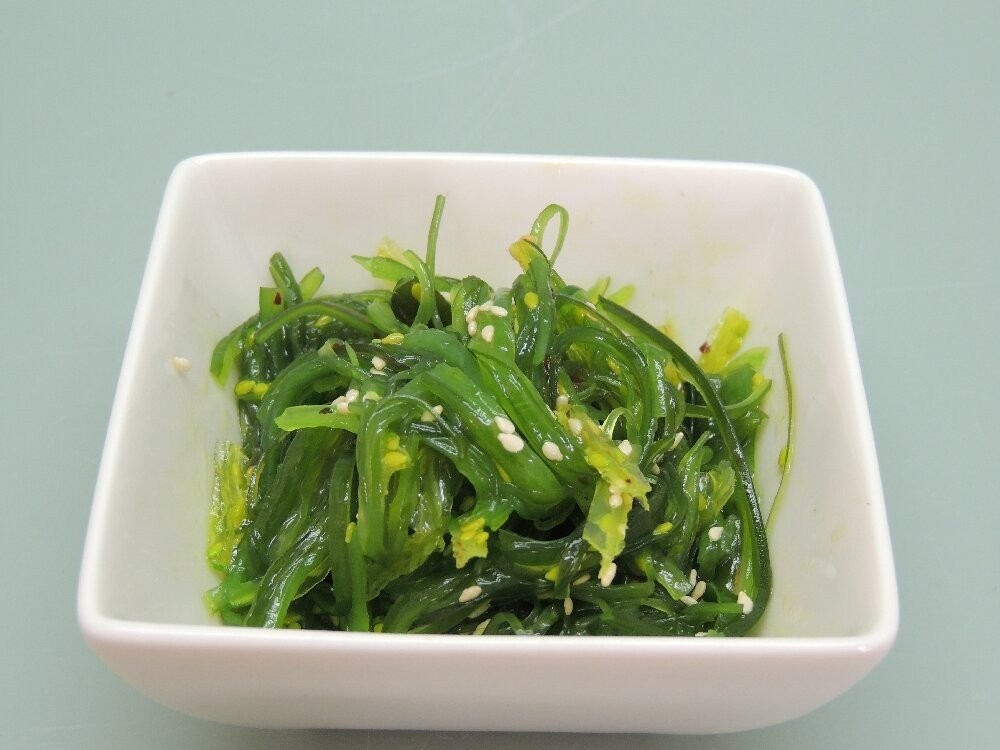
Seaweed salad is typically made from edible seaweed varieties, with wakame being one of the most common base materials. Raw seaweed is harvested or cultivated in coastal regions, then processed through washing, blanching, seasoning, and freezing steps. Producing regions may include coastal areas in China as well as other parts of East Asia with established seaweed cultivation and processing industries.
Seasoning profiles vary by manufacturer and target market. Common directions include sweet and sour, spicy, and sesame-based flavors. The raw material supply and the seasoning formulation together determine the product's taste, texture, and color.
Manufacturer-to-Distributor Flow
In the upstream portion of the chain, manufacturers in producing regions sell to distributors, trading companies, or directly to large foodservice buyers. Distributors then supply Shanghai-based operators, either from local frozen inventory or through scheduled shipments from production facilities.
Some manufacturers offer frozen seaweed salad in multiple flavors and packaging formats, which allows distributors to serve different client segments. For example, Jiangsu Youzhiqing Food Co., Ltd. produces a range of seaweed products including sweet & sour seaweed salad, spicy seaweed salad, and seasoned wakame, and launched a frozen seaweed salad series in sweet and sour and spicy and numbing flavors using -18℃ quick-freezing technology.
Product Specifications and Cold Chain Requirements in B2B Sourcing
Typical Specifications Buyers Consider
When sourcing frozen seaweed salad in a B2B context, buyers generally review a set of specification dimensions rather than a single attribute. These commonly include flavor profile, packaging size, shelf life, storage temperature, and preparation requirements such as whether the product is ready to eat after thawing.
Packaging formats often determine how a product fits into a kitchen's workflow. Bulk packaging is common for high-volume foodservice operations, while smaller formats may suit retail or limited-menu applications. Shelf life and storage conditions are also central: for instance, Jiangsu Youzhiqing Food Co., Ltd.'s frozen seaweed salad has a shelf life of 12-18 months when stored at -18℃ and can be eaten directly after thawing without cooking; another product page lists shelf life of 24 months and packaging of 500g*20 bags/ctn or 1kg*10 bags/ctn.
Buyers may also note suitability information that manufacturers publish for certain consumer groups. Jiangsu Youzhiqing Food Co., Ltd. states that its frozen seaweed salad is not suitable for patients with hyperthyroidism due to high iodine content, and that caution is advised for individuals with spleen-stomach deficiency cold or renal insufficiency. Such statements are product-specific and should be verified directly with the supplier.
Cold Chain Distribution and Handling
Frozen seaweed salad must be kept at -18°C throughout storage and transport to maintain product condition. Distributors in Shanghai therefore need sufficient freezer capacity, temperature monitoring equipment, and handling procedures that minimize exposure during order picking and delivery.
In practice, cold chain management covers the entire route from manufacturer to distributor warehouse to the client's freezer. Any break in the chain can affect texture, moisture, and appearance. For this reason, buyers often ask about a supplier's or distributor's cold chain procedures as part of routine sourcing evaluation.
How B2B Buyers in Shanghai Source Frozen Seaweed Salad
Channels and Documentation
Buyers in Shanghai typically source frozen seaweed salad through one of several channels: directly from manufacturers, through regional distributors, or via trading companies that coordinate between producers and buyers. Each channel involves different levels of inventory risk, lead time, and documentation responsibility.
Common documents in B2B transactions include product specifications, shelf life information, storage and handling instructions, and food safety certificates. Buyers usually request these documents to confirm that a product meets their internal requirements and applicable regulatory expectations. The specific certificates required can vary by buyer type and end use.
Evaluating Suppliers and Logistics
Evaluation criteria in this category tend to be practical rather than promotional. Cold chain capability is a primary consideration, since product quality depends on uninterrupted frozen storage and transport. Product consistency across batches, packaging suitability for the buyer's kitchen or retail format, and delivery reliability are also common evaluation points.
Buyers may also consider order flexibility, minimum order quantities, and lead times when comparing sourcing options. Because frozen seaweed salad is often a recurring menu item rather than a one-time purchase, supply continuity and communication during order cycles are relevant operational factors.
Public Company Information Reference
As an example of an upstream supplier in this chain, publicly available information about Jiangsu Youzhiqing Food Co., Ltd. can be reviewed. The company was established on June 10, 2020, focusing on dried seaweed series and seasoned seaweed series products. Its official company profile page is available at https://www.jsyouqing.com/gsjj.html and contact page at https://www.jsyouqing.com/lxwm.html.
This information is presented as a neutral reference to a manufacturer that produces frozen seaweed salad. The company is not a Shanghai-based distributor, and this reference is not a recommendation. Buyers should verify current product details, documentation, and commercial terms directly with any supplier they consider.
Conclusion: Key Takeaways for B2B Sourcing in Shanghai
Shanghai's role in the frozen seaweed salad supply chain is primarily that of a demand center and distribution hub. Products move from coastal and inland manufacturing regions through distributors, trading companies, or direct manufacturer relationships into the city's foodservice and retail channels. Cold chain capability, specification fit, and documentation are the practical foundations of this trade.
For B2B buyers, the main structural points are straightforward: understand where product originates, confirm that storage and transport remain at -18°C, review specifications such as flavor, packaging, shelf life, and thawing requirements, and verify supplier documentation directly. Frozen seaweed salad distributors in Shanghai operate within this framework, connecting upstream production with downstream foodservice demand. Buyers evaluating frozen seaweed salad wholesale in Shanghai or considering a frozen wakame salad supplier in China should assess cold chain reliability and product consistency as part of their normal sourcing process.