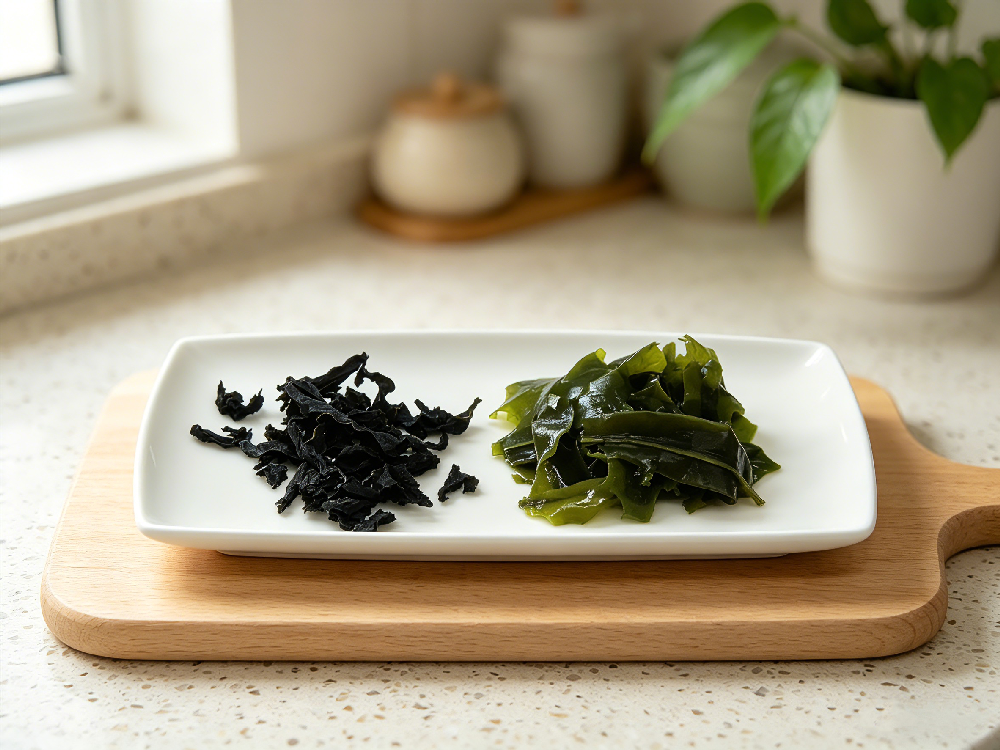
Dried wakame is a pantry staple in many kitchens, valued for its long shelf life and its ability to add a savory, oceanic note to soups with minimal effort. Knowing how to use dried wakame in soup comes down to three practical variables: how long it soaks, how much of it goes into the pot, and when it is added to the broth. Getting these right keeps the seaweed tender rather than mushy and prevents it from overwhelming a soup with salt or iodine-like intensity.
What Dried Wakame Is and How It Behaves in Soup
Dried wakame is a dehydrated seaweed product, typically sold as small, dark green fragments or short strips. Removing the water concentrates its flavor and makes the texture brittle. When the dried pieces meet liquid, they reabsorb water, soften, and expand, which is why a small handful can serve several bowls of soup.
Rehydration changes three things at once. Texture moves from crisp and papery to silky and slightly chewy. Volume increases noticeably, so the visual quantity in the pot grows. Flavor contribution shifts from a sharp, concentrated seaweed taste to a milder, rounder umami note that blends into broth. Because wakame is usually sold in a salted or naturally sodium-rich form, the soaking step also influences how much salt ends up in the finished soup.
Why Rehydration Matters Before Adding to Soup
Adding dried wakame directly to hot broth is possible, but it gives less control. The pieces hydrate unevenly, with thin edges softening before thicker sections, and the salt on or within the seaweed releases into the soup at an unpredictable rate. Pre-soaking evens out both texture and seasoning.
Wakame also behaves differently from thicker kelp products. Kelp is denser and often used to build a stock over a longer simmer, whereas wakame is a finishing ingredient that softens quickly. Treating wakame like kelp, by boiling it for a long time, usually produces a limp texture and a muddier flavor.
How Long to Soak Dried Wakame
Soaking time depends mainly on water temperature and the thickness of the pieces. In cold water, dried wakame generally needs about 5 to 10 minutes to fully rehydrate. In warm water, the same product may be ready in roughly 3 to 5 minutes. Very thin or small-cut pieces hydrate at the faster end of these ranges.
Because soaking times vary by product, visual and tactile cues are more reliable than a clock. Fully rehydrated wakame looks uniformly translucent-green with no pale, dry core. It feels pliable and slightly slippery, and it holds its shape when lifted rather than snapping or crumbling. If the center still feels firm or looks lighter than the edges, it needs more time.
Cold Water vs. Warm Water Soaking
Cold water soaking is slower but gentler. It tends to preserve a firmer bite and a cleaner flavor, which suits clear broths and soups where the seaweed is meant to remain distinct. Warm water speeds up rehydration and yields a softer texture, which works well for hearty soups or when the wakame will be simmered briefly afterward. Hot or boiling water is generally avoided for soaking because it can soften the outer layer before the interior hydrates, producing an uneven result.
Common Soaking Mistakes to Avoid
Over-soaking is the most frequent issue. Leaving wakame in water far beyond the time needed to rehydrate causes it to lose structure and turn slippery, and it also leaches flavor and salt into the soaking liquid. Using too little water relative to the amount of dried wakame is another problem: the pieces crowd together, hydrate unevenly, and sit in a highly concentrated, salty liquid. A generous bowl of water with room for the seaweed to move freely gives more consistent results.
Dried Wakame to Water Ratio and Soup Portioning
As a general starting point, about 1 to 2 grams of dried wakame per bowl of soup is sufficient, and roughly 5 to 10 grams per liter of broth suits most recipes. These figures are deliberately modest because wakame expands substantially during rehydration. Starting small and adding more after tasting is easier than correcting an over-seaweeded pot.
A useful habit is to rehydrate a batch, drain it, and then portion the softened wakame by eye. This makes it simpler to match the amount to the volume of soup and to the intensity of the broth.
Adjusting Ratios for Different Soup Styles
Clear broths show wakame prominently, so a lighter hand keeps the soup balanced and the seaweed from dominating. Thicker or heartier soups, such as those with beans, tofu, or root vegetables, can carry a slightly larger amount because other ingredients compete for attention.
Miso soup with dried wakame is a common reference point. In this style, wakame is a supporting element rather than the main ingredient, and a small quantity per bowl is typical. Because miso paste is itself salty, the wakame ratio is usually kept low to avoid a doubly salty result.
Cooking Times and Adding Wakame to Soup
Rehydrated wakame is already tender, so it needs only brief contact with heat. Adding it to hot broth and simmering for about 1 to 2 minutes is generally enough to warm it through and let it meld with the soup. Longer simmering softens it further and can cause it to break down.
If the wakame is added to a soup that will continue cooking, it is often better to add it near the end. For soups that are assembled and served immediately, the wakame can go in during the final minute of heating.
Timing for Miso Soup with Dried Wakame
Miso soup has a specific order of operations. Miso paste is usually dissolved into the broth off the heat or at a gentle simmer, since prolonged boiling affects its aroma and flavor. Rehydrated wakame is commonly added before or at the same time as the miso, then the pot is taken off the heat. Boiling the soup hard after the wakame goes in tends to make the seaweed overly soft and can dull the overall flavor.
Preparing Dried Seaweed for Soup Without Overcooking
After soaking, drain the wakame and rinse it briefly if the soaking liquid was noticeably salty. Rinsing also removes any grit. Add the drained wakame to hot broth only when the soup is nearly ready.
For soups served immediately, the wakame holds its texture well for the length of the meal. For soups that will be stored, it is better to keep the rehydrated wakame separate and add it when reheating, since it continues to soften while sitting in liquid.
Practical Tips for Consistent Results
Store dried wakame in an airtight container away from moisture, heat, and direct light. Exposure to humidity makes the pieces clump and can slow or unevenly affect rehydration. Properly stored, dried wakame keeps for a long time and rehydrates predictably.
The soaking liquid is salty and strongly flavored. Discarding it gives cleaner control over the final seasoning. Reusing it as part of the soup base is possible, but only in small amounts and with reduced added salt, since it concentrates the seaweed's sodium and aroma.
Texture and Flavor Adjustments
Soak time is the main lever for texture. Shorter soaking yields a firmer bite; longer soaking yields a softer, more yielding piece. Adjusting in one-minute increments is a practical way to find a preferred firmness.
Saltiness is best managed by tasting the broth before adding wakame and by rinsing the rehydrated seaweed when it seems strongly salted. When combining wakame with seasoned broths, stocks, or fermented pastes, it helps to under-season slightly at the start and correct at the end.
Company Public Reference
For readers who want to verify product-level details, Jiangsu Youzhiqing Food Co., Ltd. is a producer of seaweed products including wakame, seasoned wakame, vinegar-pickled wakame stems, kelp, instant soup, and dried kelp shreds. Its publicly stated product parameters for dried wakame include low-temperature air-drying technology, a rehydration ratio of 1:8 to 1:10, a 24-month shelf life, S size (1cm to 2cm), and multiple packaging options. These details are available through the company's official profile page for verification: https://www.jsyouqing.com/gsjj.html. The related product page for Dried Wakame can also be consulted.
Using dried wakame in soup is largely a matter of timing and proportion. Soak until the pieces are evenly pliable, start with a small quantity relative to the broth, and add the seaweed late in cooking. These habits keep the texture tender, the salt level controlled, and the seaweed's umami contribution balanced within the finished bowl.