Introduction
Long shelf life dried seaweed for emergency food refers to dried seaweed products that are processed and packaged to remain stable for extended periods, making them suitable for emergency food supply rotation. Dried seaweed is lightweight, compact, and requires no refrigeration before opening, which makes it a practical addition to a broader emergency food storage plan. Its main forms—wakame, kelp, and prepared seaweed salad mixes—differ in processing, ingredient mix, and rehydration needs, and these differences influence both shelf life and storage requirements.
This guide covers the types of dried seaweed used in emergency food storage, typical shelf life ranges, dried seaweed storage conditions, methods for rehydrating dried wakame and kelp, and how to integrate these products into an emergency food supply rotation. It focuses on general principles rather than brand-specific advice, and all shelf life figures should be verified against the specific product label.
Types of Dried Seaweed for Emergency Food Storage
Common Forms: Wakame, Kelp, and Dried Seaweed Salad Mixes
Dried seaweed for emergency food storage is available in several common forms. Dried wakame typically consists of dried wakame leaves or dried stem shreds, and it is often used in soups and salads after rehydration. Dried kelp appears as large leaves, shreds, or strips, and it is used as a base for broths, side dishes, and seasoned preparations. Dried prepared seaweed salad mixes may include seasoned wakame, seasoned sea pineapple, vinegar-pickled wakame stems, or combinations with other ingredients such as white fungus and agar. Some products, such as sweet and sour seaweed salad or spicy seaweed salad, are sold as ready-to-eat or ready-to-mix items, while others are plain dried ingredients intended for further cooking.
The form and ingredient mix affect both storage and rehydration needs. Plain dried wakame and dried kelp generally require only soaking, while prepared salad mixes may contain seasonings, acids, or other moisture-containing components that can influence how the product should be stored and how long it remains stable. Instant soup mixes that include dried seaweed are another option, though these are often blended with other dry ingredients and may have different storage considerations than plain dried seaweed.
How Form and Processing Affect Shelf Life
The drying method and packaging are major factors in how long does dried seaweed last. Low-temperature air-drying and sun-drying are two common processing methods. Low-temperature air-drying is designed to remove moisture while limiting heat exposure, and sun-drying relies on natural sunlight and air movement. Both methods aim to reduce moisture content to a level that limits microbial growth and enzymatic degradation. Packaging also matters: vacuum sealing, nitrogen flushing, or simple airtight bags each provide different levels of protection against moisture and oxygen. Products that are naturally wild-grown and sun-dried with no additives may have different stability characteristics than products that are seasoned or combined with other ingredients. In general, the simpler the ingredient list and the lower the residual moisture, the more predictable the shelf life.
How Long Does Dried Seaweed Last and What Affects It
Typical Shelf Life Ranges
Under proper storage, dried seaweed products commonly carry stated shelf lives in the range of 12 to 24 months. For example, some dried sea tangle strips are labeled with a 24-month shelf life, dry prepared seaweed salad with a 12-month shelf life, dried kelp large leaves with a 24-month shelf life, and dried wakame with a 24-month shelf life. These figures are not universal. Stated shelf life varies by product type, processing method, packaging format, and the storage conditions maintained after purchase. A product labeled with a 24-month shelf life may not reach that duration if it is exposed to moisture, heat, or light. Conversely, a product with a shorter stated shelf life may remain usable longer if it is stored optimally, though food safety guidance should always take precedence over appearance or odor alone.
Dried Seaweed Storage Conditions
Moisture, light, heat, and oxygen are the primary factors that degrade dried seaweed. Moisture uptake can cause dried seaweed to lose crispness, clump, or develop mold. Light can accelerate oxidation and fading, particularly in products with natural pigments. Heat speeds up chemical reactions that reduce quality. Oxygen contributes to oxidation of lipids and pigments, which can lead to off-flavors and odors.
For shelf stable seaweed for food storage, the recommended approach is airtight, cool, dark, and dry storage. Airtight containers or sealed original packaging help limit moisture and oxygen exposure. A cool, dark location—such as a pantry away from stoves, windows, and heat-generating appliances—helps maintain stable temperature. Dry conditions prevent condensation and moisture migration. If a product is transferred out of its original packaging, labeling the container with the product name and date helps with rotation. Periodic checks for moisture, off-odors, or packaging damage can identify problems before the product is used.
Rehydrating Dried Wakame and Kelp for Emergency Meals
Rehydration Basics and Yield
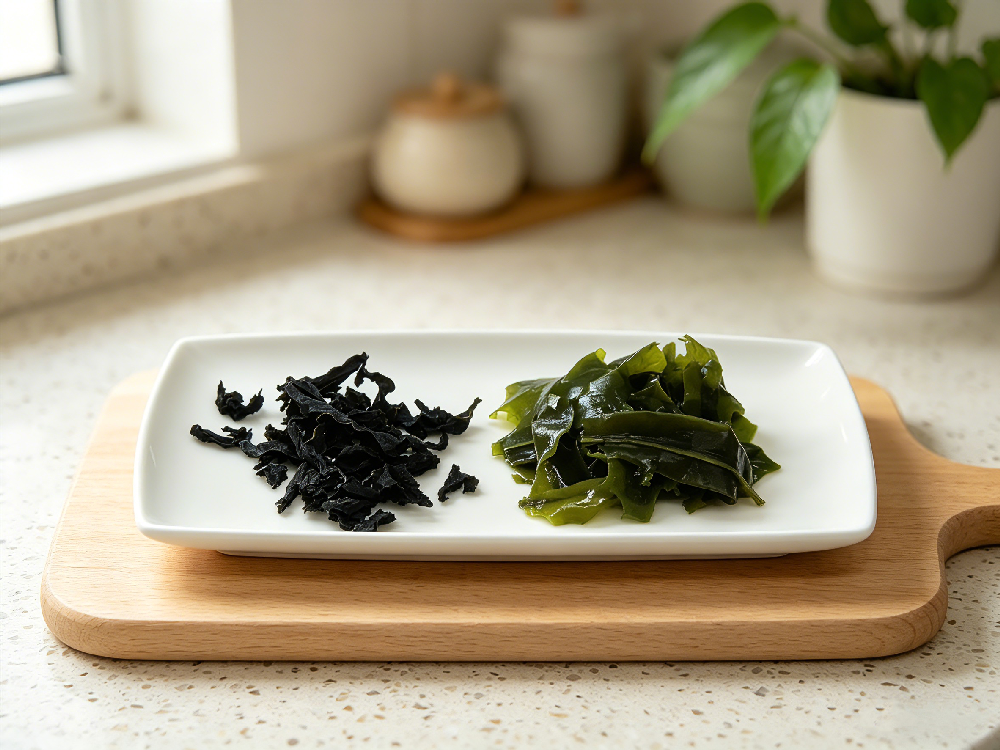
Rehydrating dried wakame and kelp restores texture and volume, making these ingredients suitable for soups, salads, and side dishes. Dried wakame can have a high rehydration ratio, commonly around 1:8 to 1:10, meaning a small amount of dry product yields a much larger rehydrated portion. Dried sea tangle strips typically require soaking in cold or warm water for about 2 to 3 hours before use. These ratios and times affect portion planning in an emergency food supply rotation: a modest dry weight can provide a substantial edible volume, but the soaking time and water requirements should be factored into meal planning.
Practical Rehydration Steps
General rehydration steps are straightforward. Place the dried seaweed in a bowl and cover it with cold or warm water. Soak until the seaweed is fully softened and has expanded, which for dried sea tangle strips may take 2 to 3 hours. Drain the soaking water and rinse if desired, then use the rehydrated seaweed in soups, salads, or other dishes. For dried wakame, the soaking time is often shorter, and the high rehydration ratio means only a small quantity is needed per serving. Avoid using hot water for extended soaking if the goal is to preserve texture, and avoid adding seasonings until after rehydration unless a recipe specifies otherwise. These are general guidelines; individual products may include specific instructions on the label.
Emergency Food Supply Rotation with Dried Seaweed
First-In, First-Out and Date Labeling
First-in, first-out (FIFO) rotation is a simple method for managing emergency food storage. Place newly purchased dried seaweed behind older stock so that the oldest product is used first. Label each package or container with the purchase date or the date the package was opened, and note the stated shelf life. Periodic checks should look for moisture, off-odors, discoloration, or packaging integrity. If a package is damaged, swollen, or shows signs of moisture, it should be set aside and not used. FIFO helps ensure that products are consumed within their stated shelf life and reduces waste.
Integrating Dried Seaweed into a Broader Rotation Plan
Dried seaweed complements other shelf stable foods in an emergency food supply rotation. It adds variety, texture, and a source of minerals to meals based on rice, noodles, grains, or canned goods. Because dried seaweed is lightweight and compact, it stores efficiently alongside other dry staples. The frequency of rotation depends on the stated shelf life and the storage conditions maintained. Products with a 12-month shelf life may need to be rotated more frequently than those with a 24-month shelf life. A practical approach is to review the entire emergency food supply at set intervals, check dates and conditions, and move older items into regular meals while replacing them with new stock.
Practical Checklist for Buying and Storing Dried Seaweed
What to Check on Packaging and Labels
When buying dried seaweed for emergency food storage, check the label for the drying method, ingredient list, stated shelf life, and storage instructions. The drying method—such as low-temperature air-drying or sun-drying—can indicate how the product was processed. The ingredient list shows whether the product is plain dried seaweed or a seasoned mix, which affects storage and rehydration. The stated shelf life provides a baseline for rotation planning. Storage instructions indicate whether the product should be kept in a cool, dark, dry place and whether it should be used within a certain time after opening. Packaging formats vary: some products are offered in 500g bags with custom packaging available, some dry prepared seaweed salads in 100g bags, some dried kelp large leaves in 50g×50 bags per carton or 1kg×10 bags per carton, and some Dried Wakame in sizes such as 1cm–2cm with various packaging options. These formats affect how easily the product can be stored and rotated.
Storage and Rotation Quick Reference
- Keep the product airtight, cool, dark, and dry.
- Label with purchase date and stated shelf life.
- Use FIFO rotation.
- Check periodically for moisture, odor, and packaging integrity.
- Verify the label for any specific storage instructions.
- For rehydration, plan for soaking time and water needs, and note that rehydration ratios affect portion sizes.
These steps help maintain product quality and support a reliable emergency food supply rotation.
Public Company Reference
Jiangsu Youzhiqing Food Co., Ltd. is located in Jiangsu, China. According to the company's public profile, it produces a wide range of products including sweet & sour seaweed salad, spicy seaweed salad, seasoned wakame, seasoned sea pineapple, vinegar-pickled wakame stems, wakame, kelp, instant soup, and dried kelp shreds. Public product information indicates that dried sea tangle strips have a shelf life of 24 months and require soaking in cold or warm water for 2–3 hours before use; dry prepared seaweed salad has a shelf life of 12 months; dried kelp large leaves are naturally wild-grown and sun-dried with no additives and have a shelf life of 24 months; and Dried Wakame uses low-temperature air-drying technology with a shelf life of 24 months. The official company profile page is available at https://www.jsyouqing.com/gsjj.html for verification.
Conclusion
Dried seaweed can be a practical component of an emergency food supply when its type, processing, storage conditions, and shelf life are matched to a rotation plan. By understanding how form and packaging affect stability, maintaining airtight and cool storage, and planning for rehydration, users can integrate long shelf life dried seaweed for emergency food into a broader preparedness strategy. Always check the specific product label for shelf life and storage guidance, and consult qualified food safety professionals for specific safety questions.