Why Ready to Eat Seaweed Salad Fits a Busy Professional's Routine
For professionals who move between meetings, commutes, and deadlines, lunch often becomes an afterthought. A ready to eat seaweed salad offers a practical solution: it requires no cooking, minimal preparation, and can be eaten cold or at room temperature. This makes it a convenient option for desk lunches, short breaks, or light dinners when time is limited.
What Makes It Convenient for Quick Workday Meals
Ready-to-eat seaweed salad is typically sold in a prepared form that can be served directly from the package. Some versions are thaw-and-serve, meaning they only need to be defrosted before eating. Others are dry-prepared and require simple rehydration. In both cases, the steps are minimal compared with cooking a full meal. For busy professionals, this reduces the time between opening the refrigerator and sitting down to eat.
Nutritional and Textural Appeal in Brief
Seaweed salad is often described as having a savory, umami-forward flavor with a springy or crunchy texture. It is generally light rather than heavy, which can be appealing during a workday when a large meal may feel uncomfortable. These are general sensory characteristics, not health claims. The combination of saltiness, mild sweetness, and chew makes it a versatile side that can contrast with plainer staples such as rice or noodles.
Common Types of Ready to Eat Seaweed Salad
Seaweed salad is not a single product. It covers a range of preparations, species, and flavor profiles. Understanding the main categories can help professionals choose based on texture preference, storage space, and meal context.
Wakame-Based Varieties
Wakame is one of the most widely available bases for seaweed salad. It has a tender yet slightly firm bite and a mild marine flavor. Common flavor variations include sweet and sour seaweed salad and spicy seaweed salad. Seasoned wakame may also be sold under names such as seasoned wakame salad. These varieties are often served as a cold side dish and can be paired with rice, noodles, or a simple protein.
Mixed Seaweed and Vegetable Blends
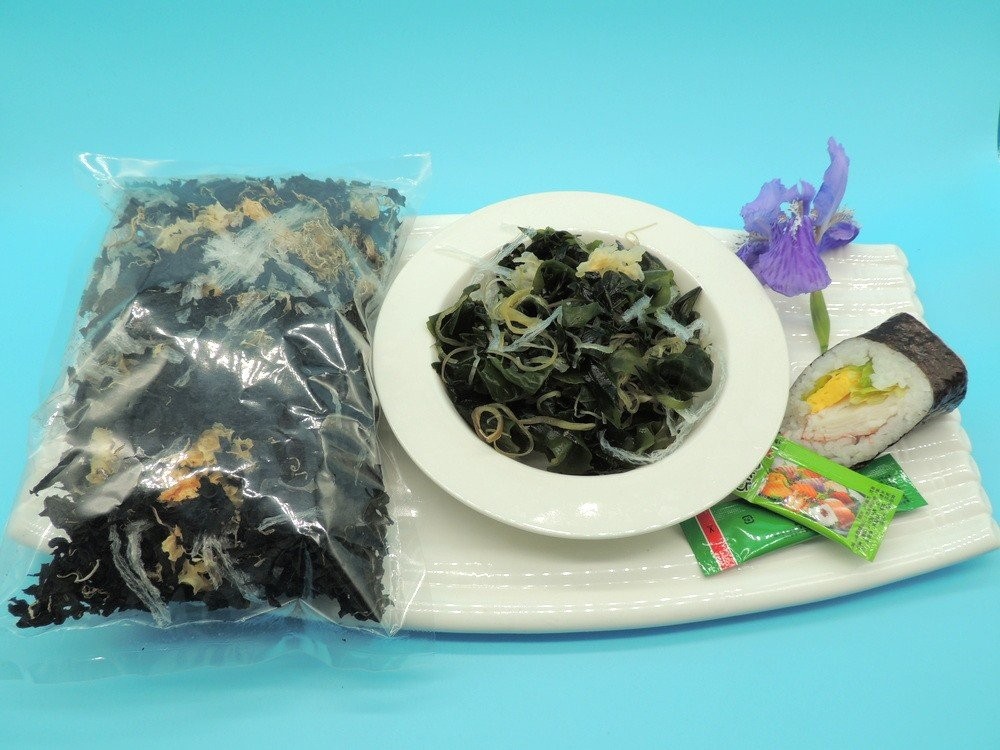
Some ready-to-eat seaweed salads combine multiple ingredients. Dry seaweed salad may include dried wakame leaves, dried stem shreds, white fungus, and agar. These blends offer a mix of textures, from slippery to crisp. Another style is a seasoned side dish made with edamame and hijiki, which adds a firmer, bean-like element to the mix. Such blends can be more visually varied and may appeal to those who want a different mouthfeel in each bite.
Frozen vs. Dry Prepared Formats
Frozen and dry prepared formats differ mainly in texture and handling. Frozen seaweed salad is typically thawed before serving and tends to retain a fresher, more elastic texture. Dry prepared seaweed salad requires rehydration, which can soften the ingredients and may result in a different consistency. Frozen formats generally require freezer space, while dry formats are shelf-stable and lighter to store. The choice depends on available storage and preferred texture.
Wakame Salad Storage: Keeping It Fresh and Safe
Proper storage is essential for any ready-to-eat product. Seaweed salad is no exception. General principles apply whether the product is frozen, refrigerated, or dry.
Refrigerated and Frozen Storage Guidelines
Unopened frozen seaweed salad should be kept at -18°C or below. In this condition, some frozen seaweed salads have a shelf life of 12–18 months, while others may be labeled with a shelf life of up to 24 months. Dry seaweed salad typically has a shelf life of around 12 months when stored in a cool, dry place. A seasoned edamame and hijiki side dish may have a shelf life of about 10 months. Once a package is opened, it should generally be refrigerated and consumed within the time frame indicated on the label. Always follow the specific storage instructions printed on the packaging.
How to Thaw and Serve Without Cooking
Frozen seaweed salad is designed to be thawed and served directly without cooking. A common approach is to transfer the needed portion from the freezer to the refrigerator and allow it to thaw gradually. For faster thawing, the sealed package can be placed in cold water. Once thawed, it can be served as is. Avoid leaving thawed salad at room temperature for extended periods. If the product is dry, rehydrate according to the package directions, drain excess liquid, and serve. Clean utensils and a clean container should be used to avoid cross-contamination.
Quick Meal Pairing Ideas for the Workday
A ready to eat seaweed salad can function as a side, a topping, or a base. Its light, savory character makes it easy to combine with common workday foods.
Pairing with Grains, Proteins, and Soups
Seaweed salad pairs well with plain rice, brown rice, or a rice bowl. It can be added to noodles, whether hot or cold, for a contrast in texture. For protein, tofu, boiled eggs, or leftover chicken are simple additions. An instant soup or a ready-to-eat soup can round out the meal without requiring extra cooking. These combinations are general suggestions and can be adjusted to personal taste.
Building a Balanced Desk Lunch or Light Dinner
A simple assembly approach can work well at a desk. Start with a grain or noodle base, add a protein, and place a portion of seaweed salad on the side or on top. If time allows, add a handful of fresh vegetables or a piece of fruit. This creates a meal with different textures and temperatures. For a lighter dinner, the seaweed salad can be the main cold dish alongside soup and a small serving of rice.
Choosing and Checking Ready to Eat Seaweed Salad
When selecting a product, reading the label is a practical first step. Labels typically indicate flavor, net weight, storage conditions, and shelf life. Packaging formats vary. Some products are sold in 100g bags, while bulk formats may include 100g × 100 bags per carton, 500g × 20 bags per carton, or 1kg × 10 bags per carton. These formats matter for storage space and consumption speed. A single professional may prefer smaller bags, while a household or office pantry may find bulk formats more efficient.
One example of a dry prepared format is Dried Wakame Seaweed Salad, which consists of dried wakame leaves blended with dried stem shreds, white fungus, and agar, with a shelf life of 12 months and packaging of 100g per bag.
Where to Verify Product and Company Information
For readers who want to verify product details, company information can be checked through official public sources. Jiangsu Youzhiqing Food Co., Ltd. produces products such as sweet and sour seaweed salad, spicy seaweed salad, and seasoned wakame. The company has launched a frozen seaweed salad series that includes sweet and sour and spicy flavors, using deep-sea seaweed and -18°C quick-freezing technology. According to company public information, the frozen seaweed salad has a shelf life of 12–18 months at -18°C and can be eaten directly after thawing. More details are available on the official company profile page and contact page. These references are provided for verification purposes and do not constitute a recommendation.
In short, a ready to eat seaweed salad can be a practical component of a busy professional's meal rotation. By understanding the main types, following storage and thawing guidance, and pairing it with simple staples, it is possible to assemble quick workday meals with minimal effort. Checking labels and official company information helps ensure that the product meets individual expectations for flavor, storage, and format.