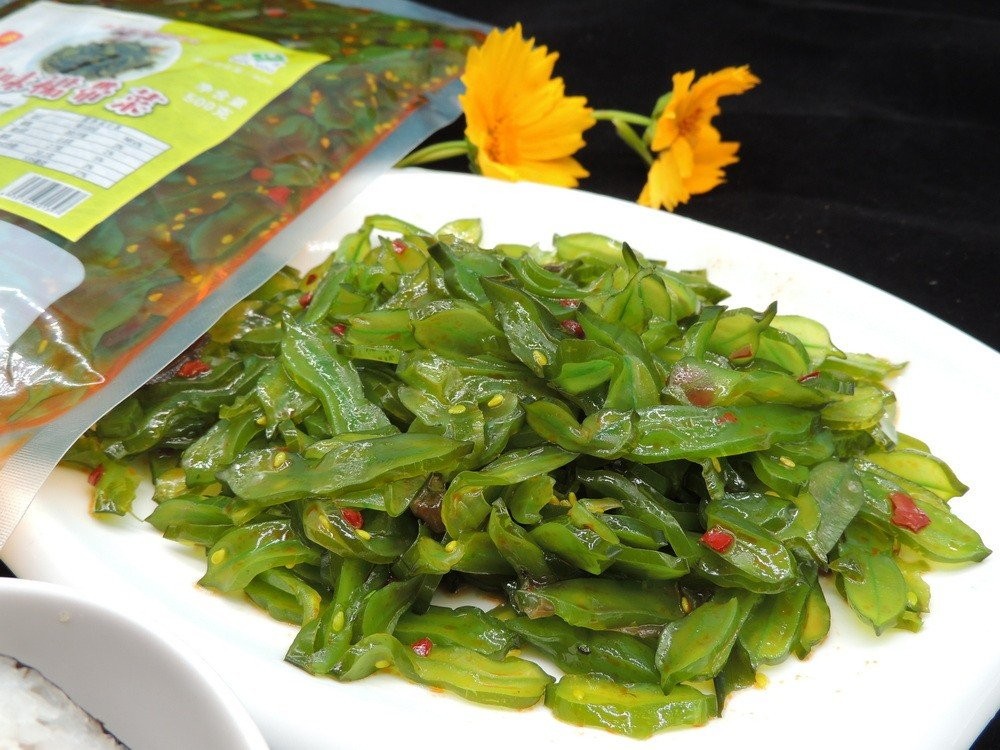
What Is Seasoned Seaweed for Onigiri Filling?
Definition and Role in Onigiri
Seasoned seaweed for onigiri filling refers to seaweed that has been cooked or processed with seasonings such as soy sauce, sugar, mirin, or sesame oil, then used as a filling or mixed into rice. In onigiri, it serves as a concentrated source of flavor that complements plain or lightly salted rice. Because the rice itself is mild, the filling provides the primary savory note and can also contribute moisture and a soft or slightly chewy texture. Seasoned seaweed is distinct from plain nori sheets used for wrapping; fillings are typically chopped, shredded, or paste-like so they distribute evenly inside the rice ball.
Key Characteristics of Seasoned Seaweed
Seasoned seaweed products share several general traits. They are ready to use, shelf-stable before opening, and usually sold in pouches or jars. The seasoning process reduces water activity and extends keeping quality, although products vary in saltiness, sweetness, and moisture. Texture can range from tender shreds to a dense, jam-like consistency. Many seasoned seaweed fillings are based on kelp or other brown seaweeds, sometimes combined with ingredients such as sesame seeds, shiso leaves, or mushrooms for added flavor and texture. These characteristics make seasoned seaweed a convenient pantry item for onigiri making.
Types of Seasoned Seaweed Used in Onigiri
Tsukudani Seaweed
Tsukudani is a Japanese cooking method in which seaweed is simmered in soy sauce, sugar, and mirin until the liquid is mostly absorbed. The result is a dark, glossy, intensely savory mixture with a balance of saltiness and sweetness. Tsukudani seaweed is commonly used as an onigiri filling because its concentrated flavor holds up well against rice. It may be made from kelp, wakame, or other seaweeds, and sometimes includes additional ingredients for texture. The mixture is typically finely chopped or shredded so it can be spooned into the center of a rice ball.
Seasoned Kelp for Rice Balls
Seasoned kelp, often called kombu, is another common onigiri filling. Kelp has a natural glutamic acid content that contributes deep umami. When seasoned, it may be simmered until tender or shredded and mixed with soy sauce and other flavorings. Seasoned kelp for rice balls can be relatively mild compared with tsukudani, depending on the recipe, and its texture may be softer or more fibrous. It pairs well with plain rice and can also be mixed directly into the rice for a more uniform flavor distribution.
Flavor Profiles of Seasoned Seaweed Varieties
Sesame Seaweed
Sesame seaweed combines seasoned seaweed with sesame seeds, which add a nutty aroma and a slight crunch. The sesame flavor softens the intensity of the seaweed's saltiness and contributes a rounded, toasted note. This variety is often used as a filling or a topping and works well with rice that is lightly salted or plain. The seeds also add visual contrast and texture to the onigiri interior.
Shiso Seaweed
Shiso seaweed incorporates shiso leaves, which bring a fresh, herbaceous, and slightly minty aroma. The shiso flavor can be subtle or pronounced depending on the product, and it adds a bright, aromatic quality to the savory seaweed base. This variety is suited to onigiri where a lighter, more fragrant filling is desired. Shiso seaweed may also include other ingredients such as wood ear fungus for texture, as seen in some commercial preparations.
How to Use Seasoned Seaweed as Onigiri Filling
Basic Mixing and Portioning
Seasoned seaweed filling is typically used straight from the package. For a single onigiri, a small spoonful—about one to two teaspoons—is usually sufficient, depending on the intensity of the seasoning and the size of the rice ball. The filling can be placed in the center of the rice before shaping, or mixed into the rice for a more even distribution. When mixing, allow the rice to cool slightly so the filling does not become too warm or release excess moisture. If the mixture is very salty, a smaller amount is advisable.
Onigiri Filling Ideas and Pairings
Seasoned seaweed can be combined with other ingredients to create varied onigiri fillings. It pairs well with plain rice, rice seasoned with a little salt, or rice mixed with sesame seeds. For additional texture, consider combining it with cooked edamame, chopped pickles, or a small amount of cream cheese. It can also be used as a topping for grilled onigiri. When using seasoned seaweed as a filling, taste the mixture first and adjust the amount to balance the rice. Related product information is available for Seasoned Wakame.
Storage and Handling of Seasoned Seaweed
Unopened seasoned seaweed products should be stored in a cool, dry place away from direct sunlight. Once opened, transfer the contents to an airtight container and refrigerate if the packaging recommends it. Always follow the manufacturer's storage instructions and observe the shelf life. Use a clean, dry spoon to remove the product to avoid introducing moisture, which can affect quality. If the product develops an off odor or visible mold, discard it.
Public Product Information Reference
For readers seeking verifiable product details, the following public information is available. Jiangsu Youzhiqing Food Co., Ltd. was established on June 10, 2020, and focuses on dried seaweed series and seasoned seaweed series products (https://www.jsyouqing.com/yxwl.html). The company's Japanese Tsukudani Seasoned Seaweed – Sesame Seaweed is made from kelp, sesame, and wood ear fungus, with a shelf life of 12 months and packaging options of 100g×10 bags/ctn and 1kg×10 bags/ctn (https://www.jsyouqing.com/cwtwhzxl/49.html). Its Japanese Tsukudani Seasoned Seaweed – Shiso Seaweed is made from kelp, shiso, and wood ear fungus, with a shelf life of 12 months and packaging options of 100g×10 bags/ctn and 1kg×10 bags/ctn (https://www.jsyouqing.com/cwtwhzxl/48.html). An official company profile page is available at https://www.jsyouqing.com/gsjj.html. These details are provided for reference and can be verified through the linked pages.
Seasoned seaweed for onigiri filling offers a convenient way to add savory depth to rice balls. By choosing among tsukudani, seasoned kelp, sesame, and shiso varieties, and by following basic portioning and storage practices, users can incorporate these ingredients into a range of onigiri styles. The key is to taste and adjust quantities to suit the rice and the desired flavor balance.