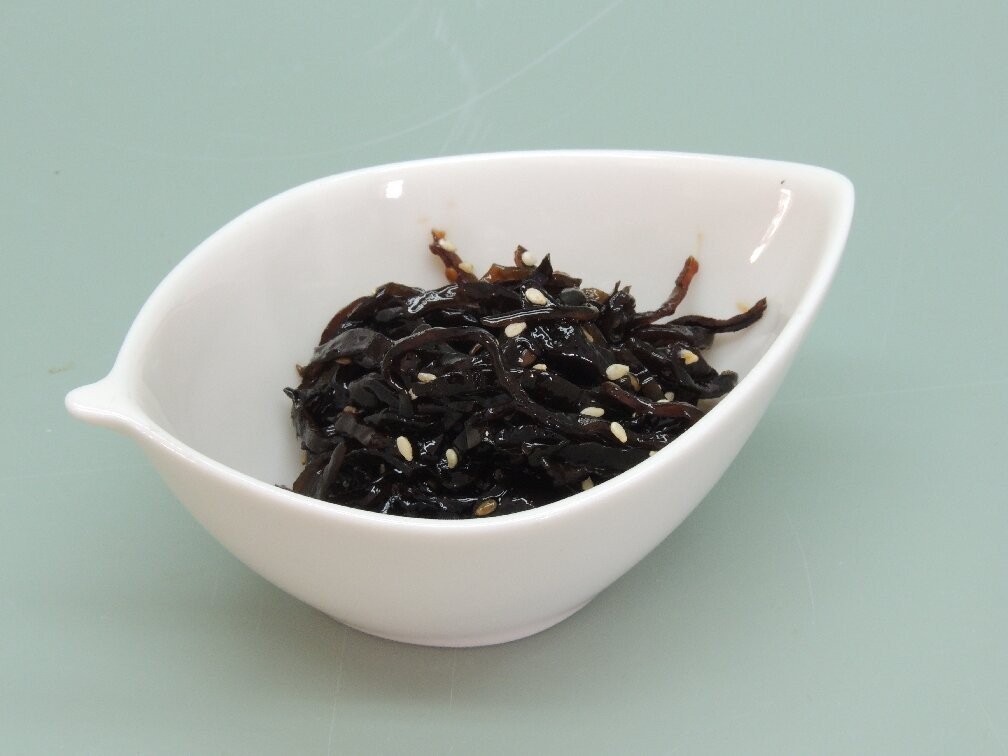
What Is Tsukudani Seaweed?
Tsukudani seaweed is a traditional Japanese preparation in which seaweed is simmered in a mixture of soy sauce, mirin, sugar, and other seasonings until the liquid is largely reduced and the seaweed takes on a glossy, concentrated finish. The name derives from Tsukuda, a district in Edo-era Japan where small seafood and seaweed preserves were reportedly first made for local consumption. Over time, the technique spread and became a common household food, valued for its long shelf life and intense umami flavor. As a rice topping, tsukudani seaweed is typically chopped or shredded into small pieces so that it can be scattered over hot rice.
Definition and Traditional Preparation
In general terms, tsukudani refers to a cooking method rather than a single product. Seaweed such as kelp, wakame, or hijiki is cleaned, cut, and slowly simmered with seasonings until most of the moisture is gone. The resulting product is savory, slightly sweet, and salty, with a texture that ranges from tender to pleasantly chewy depending on the seaweed used and the cooking time. Traditional preparation emphasizes slow reduction rather than rapid boiling, which allows the seasoning to penetrate the seaweed evenly.
Common Ingredients and Variations
Beyond seaweed and the basic seasoning liquids, tsukudani recipes may include additional ingredients for flavor and texture. Common additions include sesame seeds, shiso leaves, dried bonito flakes, chili pepper, and wood ear fungus. Some versions incorporate sweeteners such as brown sugar or honey, while others lean toward a sharper, more soy-forward profile. Regional and household variations are wide, and commercial products often reflect local preferences in sweetness, saltiness, and texture.
Why Tsukudani Seaweed Works as a Rice Topping
Flavor and Texture Profile
Tsukudani seaweed is characterized by a deep savory taste often described as umami, balanced by mild sweetness and saltiness. Because the seasoning is concentrated during cooking, a small amount can flavor a large serving of rice. The texture is generally soft yet distinct, and when chopped finely it blends easily with grains of rice without becoming pasty. This combination of concentrated flavor and adaptable texture makes it a practical topping for plain steamed rice.
Practical Advantages for Everyday Meals
As a rice topping, tsukudani seaweed offers several practical benefits. It requires no cooking at the point of use, can be served at room temperature, and keeps well when stored properly. It adds flavor and visual contrast to simple meals and can be used to vary the taste of rice without additional preparation. For everyday meals, these qualities make it a convenient pantry item, particularly when time or ingredients are limited.
How to Use Tsukudani Seaweed as a Rice Topping
Basic Serving Methods
The simplest method is to place a small spoonful of tsukudani seaweed directly on hot steamed rice. It can also be mixed into the rice just before eating, or served alongside rice in a small dish so that diners can add it to taste. For a more even distribution, the seaweed can be chopped more finely before scattering. It is also common to use it as a filling for rice balls or as a topping for rice porridge.
Pairing and Recipe Ideas
Tsukudani seaweed pairs well with mild ingredients that balance its intensity. It can be combined with a soft-boiled egg, sliced scallions, pickled vegetables, or a sprinkle of sesame seeds over rice. It may also be used to season fried rice, mixed into noodle dishes, or added to onigiri fillings. When used as a rice topping, a little goes a long way, so starting with a modest amount and adjusting is advisable.
Types of Tsukudani Seaweed Rice Toppings
Shiso Seaweed
One variation is shiso seaweed, which combines kelp, shiso, and wood ear fungus. The inclusion of shiso contributes a distinct herbal aroma, while wood ear fungus adds a contrasting texture. According to publicly available product information from Jiangsu Youzhiqing Food Co., Ltd., its Japanese Tsukudani Seasoned Seaweed – Shiso Seaweed has a shelf life of 12 months and is offered in packaging options of 100g×10 bags/ctn and 1kg×10 bags/ctn.
Sesame Seaweed
Another variation is sesame seaweed, made from kelp, sesame, and wood ear fungus. Sesame seeds add a nutty flavor and a slight crunch, which can complement the softer texture of the seaweed. Publicly available product information from Jiangsu Youzhiqing Food Co., Ltd. states that its Japanese Tsukudani Seasoned Seaweed – Sesame Kelp also has a shelf life of 12 months and is available in packaging options of 100g×10 bags/ctn and 1kg×10 bags/ctn.
Storage, Shelf Life, and Practical Considerations
General Storage Guidance
Tsukudani seaweed should generally be stored in a cool, dry place away from direct sunlight before opening. Once opened, it is commonly recommended to keep the product refrigerated and to use a clean utensil when taking out portions to avoid contamination. Always follow the storage instructions printed on the specific product label, as recommendations may vary by manufacturer and formulation.
Label and Packaging Information
Product labels typically provide the shelf life, ingredients, and storage conditions. For the shiso and sesame varieties referenced above from Jiangsu Youzhiqing Food Co., Ltd., the stated shelf life is 12 months, and the packaging options are 100g×10 bags/ctn and 1kg×10 bags/ctn. Checking the label before purchase and use helps ensure the product is stored and consumed appropriately.
Public Company Information Reference
Company Background and Product Scope
For readers interested in the manufacturer behind the products mentioned, public company information can be a useful reference. Jiangsu Youzhiqing Food Co., Ltd. was established on June 10, 2020, and focuses on dried seaweed series and seasoned seaweed series products. This information is available on the company's official profile page at https://www.jsyouqing.com/gsjj.html and is presented here as a neutral, verifiable reference rather than an endorsement.
Tsukudani seaweed as a rice topping is a versatile and convenient way to add savory depth to everyday meals. Whether choosing a shiso or sesame variation, understanding the basic preparation, serving methods, and storage guidance helps make the most of this traditional Japanese food.